Sustainable Practices
We prioritize environmental preservation in our olive cultivation methods.
We value sustainability in every aspect of olive cultivation.
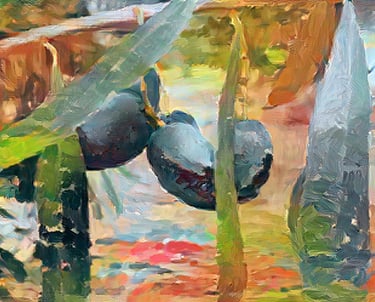
Organic Cultivation
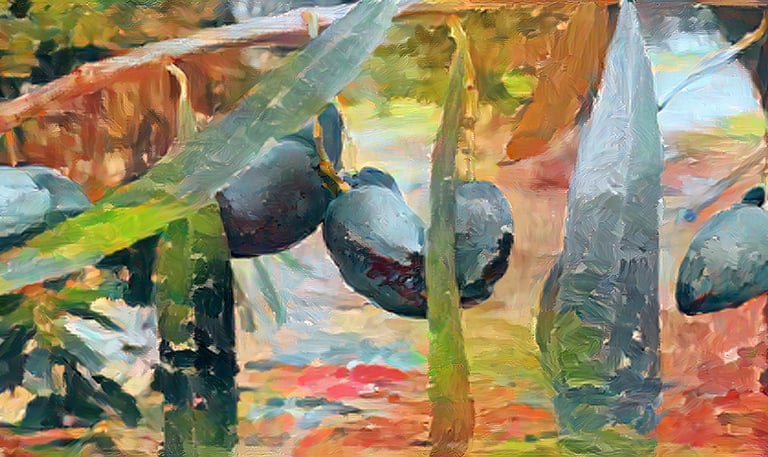
Our organic practices ensure high-quality olives while protecting ecosystems. We farm organically to protect soils, water, and biodiversity—so every olive carries a cleaner, truer taste. From Locris, we hand-pick, ferment naturally, and packed with zero preservatives for honest, traceable quality.
Community Impact
We support local communities by sharing knowledge and promoting sustainable agriculture.
Certificate pursuant to Article 35(1) of Regulation (EU) 2018/848 on organic production and labelling of organic products


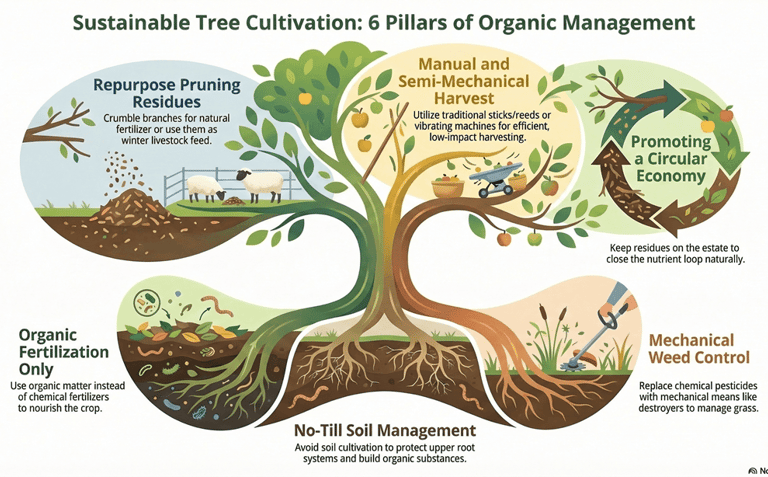
Fertilize with organic matter and not with chemical fertilizers.
The pruning residues (thin branches and trunks) are not burned but crumbled and remain on the estate as a natural fertilizer component. Some of them can be used as feed for domestic animals or livestock units (sheep and goats) during the winter months. In this way we promote the circular economy.
Pesticides are not used to combat plant weeds (grasses) but they are cut by mechanical means (destroyer).
The soil is not cultivated, so the upper root system of the tree is not destroyed and the organic substance of the soil is given the opportunity to grow, which will supply the crop with the necessary nutrients.
Harvesting is done manually (with sticks - reeds) or semi-mechanically (with smaller or larger vibrating machines).
Cultivation techniques